
This is The End of Slow Wi-Fi
Next-gen Wi-Fi for next-gen Connectivity
Download our Wi-Fi 6 Whitepaper

Purposely Designed to Face the Growing Number of Devices
and Users
Wi-Fi 6 is purpose-built to deal with the connectivity and interference issues that have emerged as the number of devices skyrockets.
Wi-Fi 6 is more than just speed improvements, it better handles multiple users and devices, dramatically improving performance for everyone. It gets your productivity, whether at work or home, back to its peak and beyond.
What's New With Wi-Fi 6?

MU-MIMO (uplink)

MU-MIMO
Better Handling of More Users Than Ever Before
Enhanced MU-MIMO gives you more capacity than ever before, allowing up to 8 devices to transmit simultaneously using a dedicated channel per device. This powerful feature greatly enhances large packet data—such as HD video—to be streamed more efficiently.
Serving more users all at the same time is absolutely essential in a world where video traffic is booming exponentially.

OFDMA
The Perfect Partner for IoT
OFDMA greatly optimises short packet transmission. Devices need no longer wait their turn, going one by one.
Instead, shorter packets can be transmitted in parallel. This greatly reduces contention, in turn cutting down latency and jitter. Handling data this way means overall better performance of your network, giving a big boost to small but latency sensitive traffic such as voice or IoT data.


| Wi-Fi 5 | Wi-Fi 6 | |
|---|---|---|
| 2.4GHz band compatibility |
X | |
| 5GHz band compatibility |


2.4GHz Band Compatibility
A Helping Hand for 2.4GHz-Exclusive Devices
Wi-Fi 5 and all of its features are only available in the 5GHz band. This meant many low-power IoT devices such as Sensors that were only compatible with the 2.4GHz band missed out.
However, Wi-Fi 6 now includes the 2.4GHz band, empowering IoT devices with low latency and higher capacity for even more simultaneously connected devices.

1024-QAM
1024-QAM: The Capacity Booster
To further facilitate massive amounts of data transfer on the wireless network, Wi-Fi 6 uses 1024 quadrature amplitude modulation (1024 QAM), an improvement from the previous Wi-Fi 5 modulation scheme (256 QAM), to add another 2 bits of data per symbol transmitted (total of 10 bits), enabling Wi-Fi 6 to ensure high quality of service (QoS) for high-traffic venues such as sport arenas, train stations, and convention centers. That’s an impressive 25% increase in data rate throughput.


Target Wake Time
A Win-Win Situation: Enhanced Battery Life and Less Interference
Previously, data transfer was a free-for-all, with all devices fighting to transmit at the same time. TWT now organises time slots for devices, only transmitting when it is their time. Devices can stay in sleep mode while not transmitting, saving power and even enhancing battery life. In device-dense deployments, contention is also significantly reduced, for better all round performance.
Contention - Based Access
Schedule - Based Access

BSS Colouring
BSS (Basic Service Set) Colouring
Wi-Fi 6 has the capacity to serve highly-populated wireless networks transmitting massive amounts of data, which means Access Points will likely be placed in closer proximity than ever before to ensure quality of service for users. This will result in signal coverage overlaps between Access Points of different wireless networks (BSS), causing signal interference and network latency to rise uncontrollably and deplete device battery power.


Where Wi-Fi 6 Fits In
-
Preparing the Smart Classroom of TomorrowAs students in the world get a learning experience upgrade, so does the demand on the Wi-Fi increase. Educational video streaming, as well as eLearning and collaboration applications can really push the school’s network to the limit. But with Wi-Fi 6, it can provide higher density and speed to support students.
-
A Busy OfficeAs the number of devices per person increases exponentially, and more employees & guests are logging on than ever before, networks are being pushed to their limits. Wi-Fi 6 however, with all its features, enables better handling of all users, so everyone experiences a smooth network experience, be it peak time or not.
-
An IoT Enabled Smart FactorySmart factories or manufacturing areas can be hotbeds for IoT devices. Frequently they only support the 2.4 GHz band, missing out on the all the features of Wi-Fi 5.
However, with Wi-Fi 6’s compatibility with the 2.4 GHz band, they can experience the same benefits as on the 5 GHz band. This offers them greater efficiency, better handling of many connections and quicker, latency free transfers.
Wi-Fi 6 in Numbers
- Max Data Speed
- Supported Band(s)
- QAM Modulation
- MU-MIMO
- Subcarrier Aggregation
- BSS Colouring
- Target Wake Time
- Wi-Fi 5
-
6933 Mbps
-
5GHz only
-
256
-
Up to 4 Streams
-
OFDM
-
No
-
No
- Wi-Fi 6
-
9607 Mbps
-
2.4GHz & 5GHz
-
1024
-
Up to 8 Streams
-
OFDMA
-
yes
-
yes
-

- DBR-X3000-AP AX3000 Wi-Fi 6 Smart Office Series Access Point
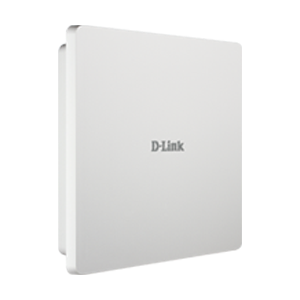
tn3.png)
3.png)


